Location: Georgia Tech Hotel and Conference Center
09:00 – 13:00
Next-Generation Adaptable Computing for Omics
In conjunction with the IEEE International Symposium on Field-Programmable Custom Computing Machines (FCCM 2026)
Atlanta, GA, USA
About
The field of omics is generating data at an unprecedented scale, pushing the boundaries of computational performance. Join us at FCCM’26 for the Next-Generation Adaptable Computing for Omics workshop, where industry and academic leaders will explore cutting-edge FPGA, CGRA, and dataflow architectures tailored for genomics, proteomics, and beyond. Through insightful talks and expert panel discussions, we’ll dive into how these adaptable architectures can revolutionize healthcare, biotechnology, and environmental research. Whether you’re a researcher, developer, or hardware enthusiast, this workshop is your gateway to shaping the future of computational genomics. Don’t miss this opportunity to engage, learn, and innovate!
Agenda & Workshop Materials
Saturday, May 16th (09:00 – 13:00), Georgia Tech Hotel and Conference Center
| Time | Talk | |
|---|---|---|
| 09:00 – 09:30 |
Introduction and Objectives of the Workshop
Madhura Purnaprajna
Marco D. Santambrogio
|
|
| 09:30 – 10:10 |
Keynote Talk: "Accelerating Genome Analysis"
Prof. Onur Mutlu
|
|
| 10:10 – 10:35 |
Accelerating Bioinformatics on FPGAs: Lessons Learned and Open Challenges
Yatish Turakhia
|
|
| 10:35 – 10:50 | Coffee Break | |
| 10:50 – 11:15 |
Single Cell Analysis and Spatial Genomics
|
|
| 10:15 – 11:40 |
Efficient AI for Omics: From Data Acquisition to Interpretation
|
|
| 11:40 – 12:05 |
Co-Design Domain-Specific Computing Systems for Adaptable Pattern Matching
|
|
| 12:05 – 12:30 |
Lost in Translation: Harnessing the Power of Nanopore Electrical Signals in Genomics
|
|
| 12:30 – 12:45 |
In-Storage Acceleration of Raw Signal Genome Analysis
|
|
| 12:45 – 13:00 |
Closing Remarks
|
|
Invited Speakers

Prof. Onur Mutlu
Short Bio: Onur Mutlu is a Professor of Computer Science at ETH Zurich. He previously held the William D. and Nancy W. Strecker Early Career Professorship at Carnegie Mellon University. His research interests are in computer architecture, computing systems, hardware security, memory & storage systems, and bioinformatics, with a major focus on designing fundamentally energy-efficient, high-performance, and robust computing systems. He started the Computer Architecture Group at Microsoft Research (2006-2009), and held product, research, and visiting positions at Intel Corporation, Advanced Micro Devices, VMware, Google, and Stanford University. He received various honors for his research, including the 2025 IEEE Computer Society Harry H. Goode Memorial Award “for seminal contributions to computer architecture research and practice, especially in memory systems.” He is an ACM Fellow, IEEE Fellow, and an elected member of the Academy of Europe. He enjoys teaching, mentoring, and enabling & democratizing access to high-quality research and education. He has supervised 24 PhD graduates, many of whom received major dissertation awards, 15 postdoctoral trainees, and more than 60 Master’s and Bachelor’s students. His computer architecture and digital logic design course lectures and materials are freely available on YouTube, and his research group makes a wide variety of artifacts freely available online. For more information, please see his webpage at https://people.inf.ethz.ch/omutlu/.

Yatish Turakhia
Short Bio: Dr. Yatish Turakhia is an Assistant Professor in the Department of Electrical and Computer Engineering at the University of California San Diego (UCSD), with affiliations in the Department of Computer Science and Engineering (CSE) and the Bioinformatics and Systems Biology (BISB) graduate program. Prior to joining UCSD, he was a postdoctoral scholar at the Genomics Institute, UC Santa Cruz. Dr. Turakhia earned his Ph.D. in Electrical Engineering from Stanford University in 2019 and his bachelor’s and master’s degrees in Electrical Engineering from the Indian Institute of Technology (IIT) Bombay in 2014. He is a recipient of the MIT Technology Review’s Innovators Under 35 award, the Hellman Fellowship, the Jacobs Early Career Award, the Amazon Research Award, the NVIDIA Graduate Fellowship, and multiple paper awards.

Davide Conficconi
Short Bio:Davide Conficconi received the Ph.D. degree in Information Technology from the Politecnico di Milano, Italy, in 2022. He is currently an Assistant Professor with the Dipartimento di Elettronica, Informazione e Bioingegneria (DEIB), Politecnico di Milano. His research interests focus on the design of fundamentally more efficient and scalable computing systems via domain specialisation. This work is pursued via hardware–software co-design, jointly reshaping algorithms, compiler infrastructures, architectural abstractions, microarchitectures, and heterogeneous systems.
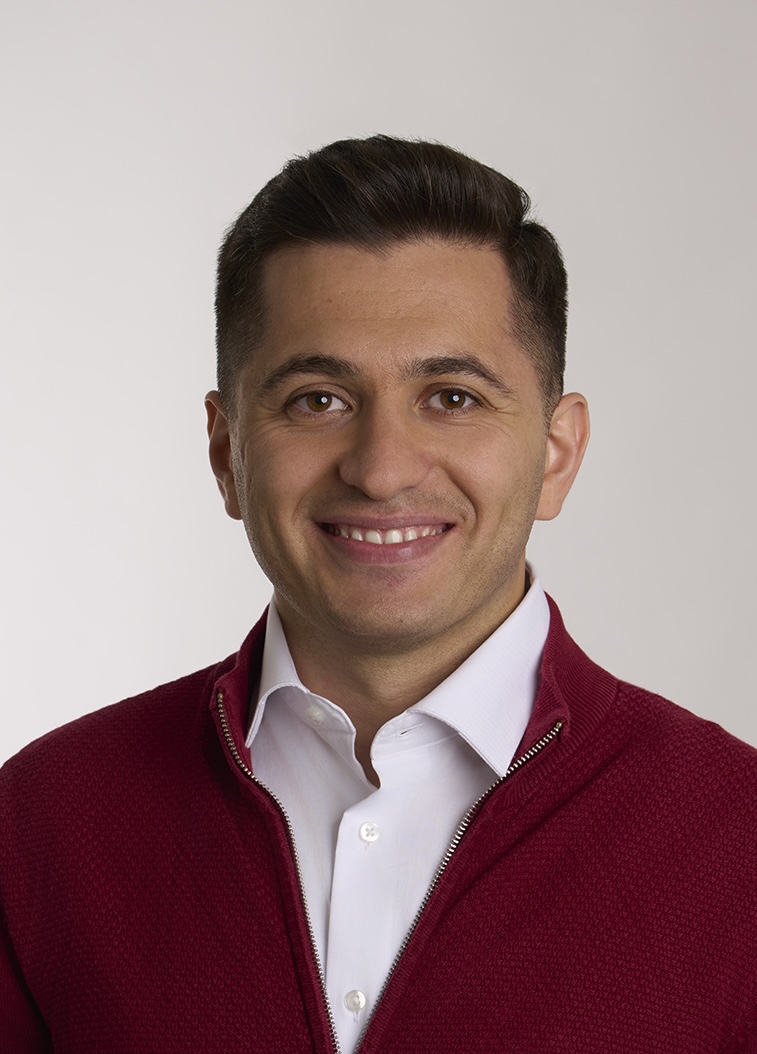
Can Firtina
Short Bio:Can Firtina is an Assistant Professor in the Department of Computer Science and an affiliate faculty at UMIACS at the University of Maryland, College Park (UMD), where he leads the STORM Research Group. He received his PhD from ETH Zurich in 2025, where he was advised by Professor Onur Mutlu. His doctoral thesis was awarded the ETH Medal. His research spans a broad range of problems that address the computational challenges in biological data analysis. Specifically, he is interested in designing new algorithms, AI/ML methods, and specialized computing systems that use emerging computing paradigms and memory technologies to enable fast, accurate, energy-efficient, and real-time analysis of genomic data. His research has been published in major bioinformatics and computer architecture venues.
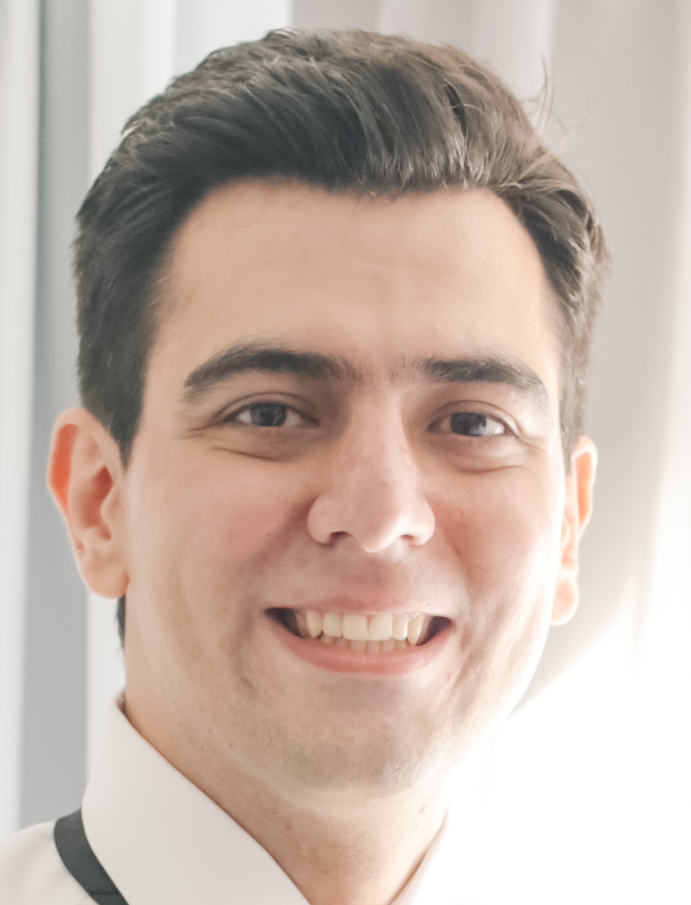
Amirali Aghazadeh
Short Bio:Amirali Aghazadeh is an Assistant Professor at Georgia Tech whose research lies at the intersection of AI, machine learning, and computational biology. He develops efficient algorithms for large-scale omics data, spanning data acquisition, modeling, and interpretability.
Livestream
🔴 Can't attend in person? Join us live!
The workshop will be livestreamed on YouTube. A replay will also be available afterwards.
▶️ Watch on YouTubeOrganizers

Madhura Purnaprajna
Madhura is with AMD India, where she works on advanced FPGA architecture, routing, and physical design methodologies in the Adaptable Computing Group. Her expertise spans FPGA CAD, programmable interconnects, agentic AI for EDA flows, and hardware–software co-design. Madhura is actively engaged in bridging FPGA systems research and real‑world applications, with a particular focus on hardware acceleration for data‑intensive workloads

Marco D. Santambrogio
Prof Marco D. Santambrogio is a Full Professor at Politecnico di Milano, and an Adjunct Professor del College of Engineering of the University of Illinois at Chicago (UIC) since 2009. He was Research Affiliate with the Computer Science and Artificial Intelligence Laboratory (CSAIL) at Massachusetts Institute of Technology (MIT) from 2010 to 2015. He received his laurea (M.Sc. equivalent) degree in Computer Engineering from the Politecnico di Milano (2004), a M.Sc. degree in Computer Science from the University of Illinois at Chicago (UIC) in 2005 and his PhD degree in Computer Engineering from the Politecnico di Milano (2008). He founded the Novel, Emerging Computing System Technologies Laboratory (NECST Laboratory), merging together the two previously existing labs: MicroLab and VPLab, and he is, since then, the Director of the NECSTLab. He conducts research and teaches in the areas of reconfigurable computing, self-aware and autonomic systems, hardware/software co-design, embedded systems, and high performance processors and systems. Marco D. Santambrogio is a senior member of both the IEEE and ACM, and he has been the IEEE Italy Computer Society Chair from 2019 to 2025.
Onur Mutlu
Onur Mutlu is a Professor of Computer Science at ETH Zurich. He previously held the William D. and Nancy W. Strecker Early Career Professorship at Carnegie Mellon University. His research interests are in computer architecture, computing systems, hardware security, memory & storage systems, and bioinformatics, with a major focus on designing fundamentally energy-efficient, high-performance, and robust computing systems. Many techniques he, with his group and collaborators, has invented over the years have largely influenced industry and have been employed in commercial microprocessors and memory & storage systems used daily by billions of people. He obtained his PhD and MS in ECE from the University of Texas at Austin and BS degrees in Computer Engineering and Psychology from the University of Michigan, Ann Arbor. He started the Computer Architecture Group at Microsoft Research (2006-2009), and held product, research and visiting positions at Intel Corporation, Advanced Micro Devices, VMware, Google, and Stanford University. He received various honors for his impactful research, including the 2025 IEEE Computer Society Harry H. Goode Memorial Award “for seminal contributions to computer architecture research and practice, especially in memory systems,” 2024 IFIP Jean-Claude Laprie Award in Dependable Computing (for the original RowHammer work), 2021 IEEE High Performance Computer Architecture Conference Test of Time Award (for the Runahead Execution work), 2022 Persistent Impact Prize of the Non-Volatile Memory Systems Workshop (for the original architectural work on Phase Change Memory), 2025 IEEE/IFIP International Conference on Dependable Systems and Networks Test-of-Time Award (for the AVATAR work), 2023 Huawei OlympusMons Award in Storage Systems, 2021 Intel Outstanding Researcher Award, 2019 ACM SIGARCH Maurice Wilkes Award, and dozens of best paper, “Top Pick” paper, and Best Artifact recognitions at various leading computer systems, architecture, and security venues. He is an AAAS Fellow, ACM Fellow, IEEE Fellow, and an elected member of the Academy of Europe. He enjoys teaching, mentoring, and enabling & democratizing access to high-quality research and education. He has supervised 26 PhD graduates, many of whom received major dissertation & other awards, more than 20 postdoctoral trainees, and more than 70 Master’s and Bachelor’s students. His computer architecture and digital logic design course lectures and materials are freely available on YouTube (https://www.youtube.com/OnurMutluLectures & https://www.youtube.com/@CMUCompArch), and his research group (https://safari.ethz.ch/) makes a wide variety of open-source artifacts freely available online (https://github.com/CMU-SAFARI). For more information, please see his webpage at https://people.inf.ethz.ch/omutlu/.

Konstantina Koliogeorgi
Konstantina Koliogeorgi is a Postdoctoral Researcher at the SAFARI Research Group at ETH Zurich, led by Prof. Onur Mutlu. She received her Ph.D. degree in Electrical and Computer Engineering in 2023 at National Technical University of Athens (NTUA), advised by Prof. Dimitrios Soudris. Her research interests are in the field of computer systems and architecture, heterogeneous computing, and hardware acceleration. Her research has focused on hardware-software co-design, efficient high-level synthesis optimization, and design space exploration, targeting mainly genome analysis applications.
Past Editions
Event Location
Venue
Georgia Tech Hotel and Conference Center
800 Spring Street NW
Atlanta, GA 30308
USA
The workshop will be held in conjunction with FCCM 2026.
For registration and accommodation information, please visit the FCCM 2026 website.
Contact
For questions about the workshop, please contact:
Madhura.Purnaprajna@amd.com
marco.santambrogio@polimi.it
onur.mutlu@inf.ethz.ch
kkoliogeorgi@ethz.ch