MCCSys 2026
4th Workshop on Memory-Centric Computing Systems
In conjunction with the 32nd International Symposium on
High-Performance Computer Architecture (HPCA 2026)
Sydney, Australia
About
Processing-in-Memory (PIM) is a computing paradigm that aims to overcome data movement bottlenecks by making memory systems compute-capable. Explored over several decades since the 1960s, PIM systems are now becoming a reality with the advent of the first commercial products and prototypes. PIM can improve performance and energy efficiency for many modern applications. However, there are many open questions spanning the entire computing stack and many challenges for widespread adoption.
This combined tutorial and workshop will focus on the latest advances in PIM technology, spanning both hardware and software. It will include novel PIM ideas, different tools and frameworks for conducting PIM research, and programming techniques and optimization strategies for PIM kernels. First, we will provide a series of lectures and invited talks that will provide an introduction to PIM, including an overview and a rigorous analysis of existing PIM hardware from industry and academia. Second, we will invite the broad PIM research community to submit and present their ongoing work on memory-centric systems. The program committee will favor papers that bring new insights on memory-centric systems or novel PIM-friendly applications, address key system integration challenges in academic or industry PIM architectures, or put forward controversial points of view on the memory-centric execution paradigm. We also consider position papers, especially from industry, that outline design and process challenges affecting PIM systems, new PIM architectures, or system solutions for real state-of-the-art PIM devices.
Call for Presentations
This workshop consists of invited talks on the general topic of memory-centric computing systems. There are a limited number of slots for invited talks. If you would like to deliver a talk on related topics, please contact us by filling out this form.
We invite abstract submissions related to (but not limited to) the following topics in the context of memory-centric computing systems:
- Design of novel and new processing-in-memory (PIM) architectures, including system solutions for real state-of-the-art PIM devices
- Analysis and mapping of novel applications to state-of-the-art PIM systems
- Programming models and code generation support for PIM
- Runtime engines for adaptive code and data scheduling, data mapping, access control for PIM systems
- Memory coherence mechanisms for collaborative host–PIM execution
- Virtual memory support for a unified host and PIM address space
- Data structures and algorithms for PIM systems
- Infrastructures to assess the benefits and feasibility of PIM systems, including benchmarks and simulation infrastructures for PIM prototyping
- Issues related to robustness and security of PIM systems
- Experimental analysis and benchmarking of real PIM systems
Key Dates
Agenda & Workshop Materials
| Time | Talk |
|---|---|
| 08:45 – 08:55 |
Logistics/Welcome
|
| 08:55 – 10:30 |
Memory-Centric Computing: Solving Memory's Computing Problem
|
| 10:30 – 11:00 | Coffee Break |
| 11:00 – 11:35 |
Processing-using-Memory in Real DRAM Chips
|
| 11:35 – 12:10 |
MASTODON: Enabling Early-Stage Cross-Stack Simulation for Processing Using Memory Systems
|
| 12:10 – 12:45 |
Fault Injection Framework for Processing-using-Memory Architectures
|
| 12:45 – 13:45 | Lunch Break |
| 13:45 – 14:20 |
Offloading to CXL Computational Memory
|
| 14:20 – 14:55 |
Architectural and System Software Support for PIM Integrated Systems
|
| 14:55 – 15:30 |
Revisiting Main Memory-Based Covert and Side Channel Attacks in the Context of Processing-in-Memory
|
| 15:30 – 16:00 | Coffee Break |
| 16:00 – 16:35 |
PIMphony: Overcoming Bandwidth and Capacity Inefficiency in PIM-based Long-Context LLM Inference Systems
|
| 16:35 – 17:10 |
Storage-Centric Systems for Genomics and Metagenomics
Nika Mansouri Ghiasi
|
| 17:10 – 17:40 |
Conduit: Programmer-Transparent Near-Data Processing Using Multiple Compute-Capable Resources in Solid State Drives
Rakesh Nadig
|
| 17:40 – 17:45 |
Closing Remarks
|
Invited Speakers
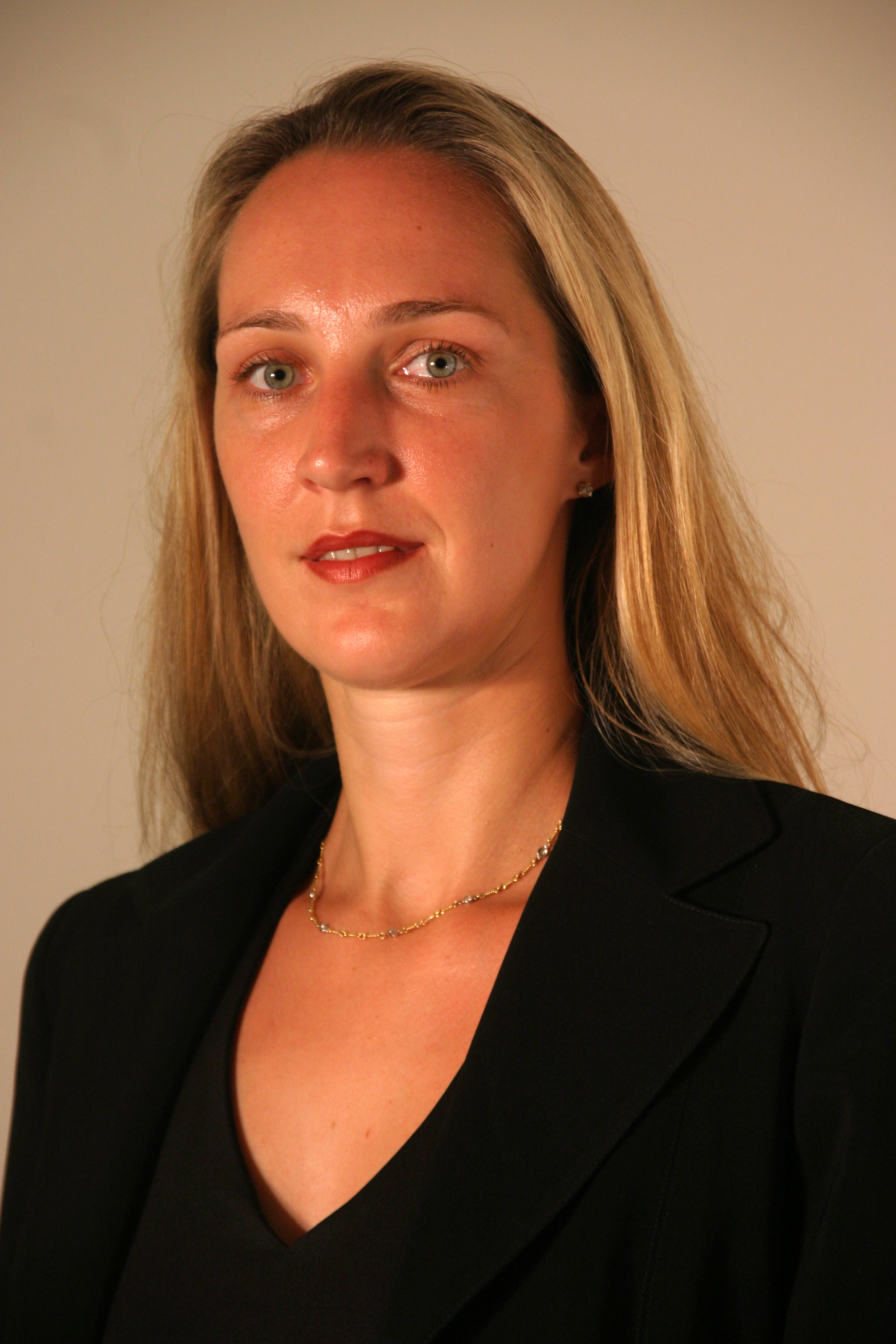
Prof. Ada Gavrilovska
Short Bio: Ada Gavrilovska is a Professor in the School of Computer Science at Georgia Tech. Her research is focused on designing systems for emerging technologies, and she develops new systems software solutions in response to new hardware, applications, and use cases. Her past research has considered the impact on systems software from programmable network processors, high-performance interconnects, multi/manycores, virtualization and cloud computing. Her recent research is driven by two major trends rooted in the exponential growth in demand for data and for ever-faster insights from such data – the proliferation of new memory system designs, and the shift to edge computing. She has served as program or general chair for OSDI’24, SOCC’22, HPDC’22, USENIX ATC’20, as an Associate Editor for the IEEE Transactions on Cloud Computing and the ACM Transactions of Computer Systems. Gavrilovska’s research has been supported by the NSF, the Department of Energy, the Semiconductor Research Corporation, and by multiple industry awards, including from Cisco, HPE, IBM, Intel, Intercontinental Exchange, LexisNexis, VMware, and others. She is currently a PI and Systems Software co-lead in the SRC/DARPA center for Processing with Intelligent Storage and Memories (PRISM).

Prof. Saugata Ghose
Short Bio: Saugata Ghose is an assistant professor in Computing and Data Science at the University of Illinois Urbana-Champaign, where he leads the ARCANA Research Group. His research interests include data-centric computer architectures and systems, new interfaces between systems software and hardware architectures, and architectures for emerging platforms and application domains. He holds M.S. and Ph.D. degrees from Cornell University, and dual B.S. degrees from Binghamton University. Among his awards, he was named an Intel Rising Star, has been inducted into the ISCA and HPCA Halls of Fame, and was a Wimmer Faculty Fellow while at Carnegie Mellon University. For more information, please visit his website at https://ghose.cs.illinois.edu/.
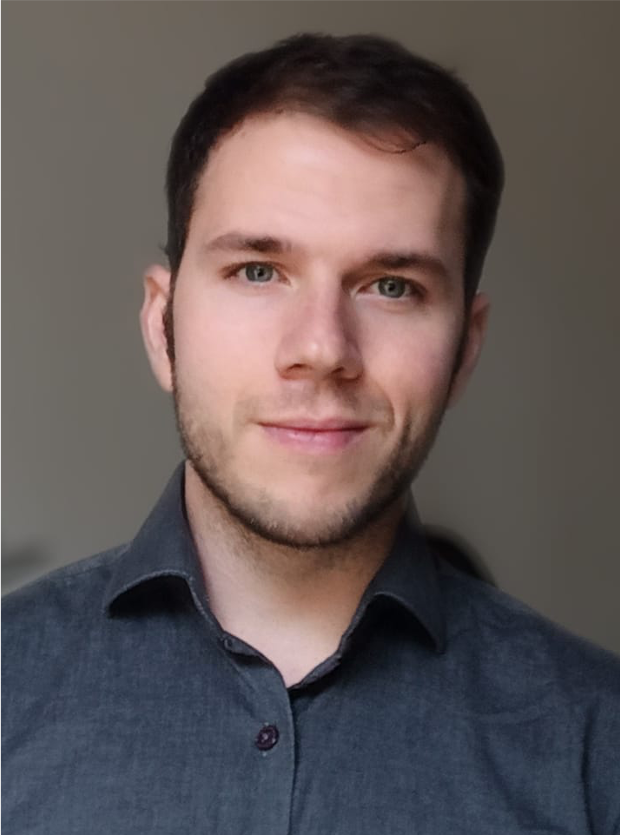
Dr. João Paulo Cardoso de Lima
Short Bio: I received my bachelor's degree in Computer Engineering from the Federal University of Santa Catarina (UFSC) in 2017, followed by a master's degree in 2019 and a Ph.D. in Computer Science from the Federal University of Rio Grande do Sul (UFRGS) in 2025. I'm currently a postdoctoral researcher at the Chair for Compiler Construction to research and develop code optimizations for emerging AI systems as part of the ScaDS.AI Dresden/Leipzig center. My main research interests include Processing-in-Memory architectures, system design, hardware/software co-design, design automation tools, compilers, reliability evaluation, and fault tolerance methods. On the application side, I am particularly interested in efficient methods for machine learning algorithms through memory-centric optimizations, whether compiler-driven, hand-tuned, or enabled by domain-specific tools, for energy efficiency.

Dongjae Lee
Short Bio: Dongjae Lee is a third-year Ph.D. student at KAIST, advised by Professor Minsoo Rhu. He received his B.S. degree in Electrical Engineering from Korea University and his M.S. from KAIST. His research primarily focuses on system-level support for processing-in-memory (PIM) architectures. For more information, please visit his website (https://sites.google.com/view/dongjaelee/).

Kyungmo Koo
Short Bio: Kyungmo Koo is a second-year Ph.D. student in the integrated M.S./Ph.D. program at Hanyang University, advised by Professor Jungwook Choi, and a member of the AIHA (AI Hardware and Algorithm) Lab. He received his B.S. degree from Hanyang University. His research focuses on optimizing PIM-based memory-centric systems, with an emphasis on system architecture and end-to-end performance/efficiency.
Livestream
🔴 Can't attend in person? Join us live!
The workshop will be livestreamed on YouTube. A replay will also be available afterwards.
▶️ Watch on YouTubeOrganizers

Ismail Emir Yuksel
Ismail Emir Yuksel is a 2nd-year PhD student in the SAFARI Research Group at ETH Zurich under the supervision of Prof. Onur Mutlu. His current broader research interests are in computer architecture, processing-in-memory, and hardware security, focusing on understanding, enhancing, and exploiting fundamental computational capabilities of modern DRAM architectures. His recent publications show that commodity DRAM chips, without any modification to the chip itself (only with modifications to the memory controller), are able to execute bulk-bitwise computation and data movement operations (including NAND, NOR, NOT, AND, OR, MAJority, multi-row copy, and initialization functions) in a reasonably robust manner.

F. Nisa Bostanci
F. Nisa Bostanci is a fourth-year PhD student in the SAFARI Research Group at ETH Zurich, under the supervision of Prof. Onur Mutlu. She is broadly interested in computer architecture and, more specifically, in security, reliability, and safety (robustness) of memory systems, emerging memory and computation paradigms, including Processing-In-Memory architectures (PIM), and designing effective and efficient solutions to address robustness issues in modern and future systems. Her recent works uncover and mitigate new security vulnerabilities that emerge with the adoption of read disturbance solutions and PIM architectures to aid in designing robust future systems.

Ataberk Olgun
Ataberk Olgun is a senior PhD student at ETH Zurich, working with Prof. Onur Mutlu. His broad research interests include designing secure, high-performance, and energy-efficient DRAM architectures. Especially with the worsening RowHammer vulnerability, it is increasingly difficult to design new DRAM architectures that satisfy all three characteristics. His current research focuses on i) deeply understanding and ii) efficiently mitigating the RowHammer vulnerability in modern systems.

Dr. Zhiheng Yue
Zhiheng Yue is a postdoctoral researcher at ETH Zurich, working with Prof. Onur Mutlu. He received the B.S. degree in electronic science and technology from the Beijing University of Posts and Telecommunications, Beijing, China, in 2017, and the M.S. degree in electrical and computer engineering from the University of Michigan, Ann Arbor, MI, USA, in 2019, and the Ph.D. degree in electronic science and technology from Tsinghua University, Beijing, in 2024. His current research interests include deep learning, Processing-in-memory, AI acceleration, 3D stacking, and very-large-scale-integration (VLSI) design.

Dr. Mohammad Sadrosadati
Mohammad Sadrosadati received the B.Sc., M.Sc., and Ph.D. degrees in Computer Engineering from Sharif University of Technology, Tehran, Iran, in 2012, 2014, and 2019, respectively. He spent one year, from April 2017 to April 2018, as an academic guest at ETH Zurich, hosted by Prof. Onur Mutlu during his Ph.D. program. He is currently a senior researcher and lecturer at ETH Zurich, working under the supervision of Prof. Onur Mutlu. His research interests are in the areas of heterogeneous computing, processing-in-memory, memory systems, and interconnection networks. Due to his achievements and impact on improving the energy efficiency of GPUs, he won the Khwarizmi Youth Award, one of the most prestigious awards, as the first laureate in 2020, to honor and embolden him to keep taking even bigger steps in his research career.

Dr. Geraldo F. Oliveira
Geraldo F. Oliveira received a B.S. degree in computer science from the Federal University of Viçosa, Viçosa, Brazil, in 2015, an M.S. degree in computer science from the Federal University of Rio Grande do Sul, Porto Alegre, Brazil, in 2017, and a Ph.D. degree in computer science from ETH Zürich, Zürich, Switzerland, in 2025, advised by Prof. Onur Mutlu. His current research interests include system support for processing-in-memory and processing-using-memory architectures, data-centric accelerators for emerging applications, approximate computing, and emerging memory systems for consumer devices. He has several publications on these topics.

Professor Onur Mutlu
Onur Mutlu is a Professor of Computer Science at ETH Zurich. He previously held the William D. and Nancy W. Strecker Early Career Professorship at Carnegie Mellon University. His research interests are in computer architecture, computing systems, hardware security, memory & storage systems, and bioinformatics, with a major focus on designing fundamentally energy-efficient, high-performance, and robust computing systems. He started the Computer Architecture Group at Microsoft Research (2006-2009), and held product, research and visiting positions at Intel Corporation, Advanced Micro Devices, VMware, Google, and Stanford University. He received various honors for his research, including the 2025 IEEE Computer Society Harry H. Goode Memorial Award “for seminal contributions to computer architecture research and practice, especially in memory systems.” He is an ACM Fellow, IEEE Fellow, and an elected member of the Academy of Europe. He enjoys teaching, mentoring, and enabling & democratizing access to high-quality research and education. He has supervised 25 PhD graduates, many of whom received major dissertation awards, 18 postdoctoral trainees, and more than 70 Master’s and Bachelor’s students. His computer architecture and digital logic design course lectures and materials are freely available on YouTube and his research group makes a wide variety of artifacts freely available online. For more information, please see his webpage at https://people.inf.ethz.ch/omutlu/.
Past Editions
Event Location
Venue
Sydney International Convention Centre (ICC)
Iron Wharf Place
Sydney
Australia
The workshop will be held in conjunction with HPCA 2026.
For registration and accommodation information, please visit the HPCA 2026 website.
Contact
For questions about the workshop, please contact the organizers:
General Inquiries: ismail.yuksel@safari.ethz.ch
SAFARI Research Group: safari.ethz.ch