2nd Ramulator & DRAM Bender Tutorial
Cutting-Edge Infrastructures
for Real and Future Memory System Evaluation
In conjunction with the International Symposium on Computer Architecture 2026 (ISCA 2026)
Raleigh, North Carolina, USA
About
DRAM is predominantly used to build the main memory systems of modern computing devices. To improve performance, reliability, and security, it is critical to conduct both system-level simulation studies and experimental characterization of cutting-edge DRAM chips. Simulation enables understanding of the complex interactions between DRAM, emerging memory technologies, and modern applications, while real-chip characterization provides concrete insights into DRAM performance, robustness, latency, and power under different conditions (e.g., temperature and voltage).
This tutorial+workshop will introduce simulation-based DRAM research together with experimental DRAM characterization using real DRAM chips. We will provide an extensive overview of: Ramulator, a cycle-accurate and extensible main memory simulator, and DRAM Bender, an FPGA-based DRAM testing infrastructure.
Ramulator
Ramulator is an extensible main memory simulator that provides cycle-level performance models for a variety of commercial DRAM standards (e.g., DDR3/4, LPDDR3/4, GDDR5, HBM), emerging memory technologies, and academic proposals. Its modular design enables easy integration of additional standards, technologies, and mechanisms. Ramulator is written in C++ and can be easily integrated into both full-system simulators, such as gem5, as well as other microarchitectural simulators, zsim, and Virtuoso.
DRAM Bender
DRAM Bender (based on SoftMC), is an FPGA-based DRAM testing infrastructure. DRAM Bender provides simple and intuitive high-level programming interfaces in C++ and Python. A user of DRAM Bender writes DRAM test programs in a high-level language. DRAM Bender’s programmer interface automatically translates these programs into low-level DRAM Bender instructions (e.g., DRAM commands, arithmetic, memory, control-flow instructions) on the FPGA. Thereby, DRAM Bender enables users with diverse technical backgrounds to rapidly characterize DRAM without requiring logic design expertise.
Tentative Agenda
| Time | Speaker | Title | Slides |
|---|---|---|---|
| 08:30 | Nisa Bostanci & Ataberk Olgun | Logistics | |
| 08:30–09:00 | Onur Mutlu | Tools for Evaluating Memory and Memory-Centric Computing: DRAM, Storage, Virtual Memory | Download |
| 09:00–10:00 | Ataberk Olgun | Introduction to DRAM Bender and FPGA-Based Infrastructures for Memory Systems Research | Download |
| Time | Speaker | Title | Slides |
|---|---|---|---|
| 10:30–11:00 | Dr. Zhaoqiang Bai | DRAM Operations under Cryogenic Temperatures: From Device Physics to DIMM-Level Behavior | Download |
| 11:00–11:30 | F. Nisa Bostanci | Introduction to Ramulator and Memory System Simulation | Download |
| 11:30–12:00 | Haocong Luo | Introduction to Ramulator 2.1 | Download |
| Time | Speaker | Title | Slides |
|---|---|---|---|
| 13:30–14:00 | F. Nisa Bostanci | Ramulator Research Highlights | Download |
| 14:00–14:30 | Prof. Prashant Nair | Rethinking Memory System Simulation for Speed, Modularity, and Coverage | Download |
| 14:30–15:00 | Prof. Jung Ho Ahn | From In-House Simulators to Ramulator and DRAM-Bender: Lessons and Implications | Download |
| 15:00–15:30 | Ismail Emir Yuksel | ColumnDisturb: Understanding Column-based Read Disturbance in Real DRAM Chips and Implications for Future Systems | Download |
Hands-on Session Resources
Download the hands-on package for the private key, SSH config template, and installer script. The host name will be communicated orally at the workshop.
Download hands-on packageunzip safari-demo-hands-on.zip
cd safari-demo-hands-on
chmod +x install-ssh-config.sh
./install-ssh-config.sh HOST_NAME
ssh HOST_NAMEInvited Speakers
For years, our research group focused on developing and maintaining custom, in-house performance simulators for main-memory exploration. Recently, however, the infrastructure landscape has shifted. Today, our research relies mostly on widely adopted open-source tools: Ramulator for architectural simulation and DRAM-Bender for characterizing real-world DRAM hardware. In this talk, I will discuss the rationale behind this transition, the practical implications for academic research groups, and our perspectives on the future of memory system evaluation infrastructure.
Jung Ho Ahn is a Professor at Seoul National University. He received his Ph.D. in Electrical Engineering from Stanford University in 2007. Prior to joining SNU, he was a Senior Research Scientist at HP Labs, and he later completed a sabbatical at Google and Samsung Electronics. His research focuses on bridging the gap between the performance and efficiency demands of emerging applications and the potential of modern massively parallel systems, with a specific emphasis on memory subsystems. Professor Ahn is an inductee of the HPCA, ISCA, and MICRO Halls of Fame.
Cryogenic operation has been proposed as a potential approach to alleviate DRAM power and bandwidth limitations at room temperature, but its impact across the full memory stack remains unclear. In this talk, I will present our recent full-stack evaluation of cryogenic DRAM, spanning device-level characterization, circuit-level simulation, and DIMM-level testing of commercial DDR4 modules. Temperature-dependent measurements on representative sub-20 nm DRAM devices show strongly suppressed leakage and improved switching behavior at low temperature, while circuit simulations indicate substantial power–performance opportunities for DRAM peripheral circuits at 77 K. At the DIMM level, we examine functional operating limits, data retention, RowHammer vulnerability, operating frequency, and power consumption under cryogenic conditions. Our results show that although retention can be significantly improved at low temperature, RowHammer remains strongly pattern-dependent and can constrain the usable refresh margin. In addition, DIMM-level dynamic power does not automatically improve without voltage or circuit optimization. These findings highlight the need for coordinated device–circuit–system co-optimization to realize functional, reliable, and energy-efficient cryogenic DRAM. Through this case study, I will introduce how DRAM Bender enables fine-grained DIMM-level characterization by allowing direct control over DRAM commands, timing parameters, refresh behavior, and stress patterns.
Acknowledgement: I would like to acknowledge Prof. Jungsik Kim and his group at Gyeongsang National University for their ongoing collaboration on DRAM characterization and reliability under extreme operating environments.
Dr. Zhaoqiang Bai is a Senior Research Manager at Beijing Superstring Academy of Memory Technology, where he works on advanced memory pathfinding, including 3D-DRAM, cryogenic DRAM, and non-volatile memory technologies. His research interests include advanced memory materials/device modeling, and the reliability and characterization of memories under extreme environments. Dr. Bai received his Ph.D. in Physics from the National University of Singapore; he also holds an M.S. in Electrical Engineering from Stanford University. He has published more than 30 research papers and filed more than 20 patent applications.
Ramulator is one of the most widely used cycle-accurate DRAM simulators in computer-architecture research, valued for its speed, modularity, and broad standard coverage. This talk asks how the simulator itself can be improved, and presents a roadmap organized around three areas. The first area is modeling fidelity and policy completeness: extending Ramulator with controller and DRAM behaviors that are missing or only partially supported — state-of-the-art address mappings such as those used by recent Intel and AMD Zen processors, more row-buffer (page) policies, same-bank refresh and refresh management, and a broader set of schedulers. The second area is integration with more accurate front-end simulators, such as gem5 and ChampSim, providing detailed, maintained wrappers or tighter built-in coupling so that memory-system performance can be measured under a realistic, detailed microarchitecture — capturing the effects of branch prediction, prefetching, and the cache hierarchy. The third area is security and reliability: as these research topics grow in importance, first-class support such as built-in RowHammer test patterns and ECC error-injection modeling would let users study these effects directly. Together these changes make Ramulator a more complete, better-integrated, and more broadly useful platform.
Prashant J. Nair is an Associate Professor at the University of British Columbia (UBC) and also the lead architect of the 3D-memory architecture at d-Matrix. He leads the Systems and Architectures (STAR) Lab at UBC and is also an Affiliate Fellow of the Quantum Algorithms Institute. His research focuses on memory architectures and systems. Dr. Nair’s recognitions include the 2024 TCCA Young Architect Award, the 2025 DSN Test of Time Award, the HPCA 2023 Best Paper Award, a MICRO 2024 Best Paper nomination, and the HPCA 2025 Distinguished Artifact Award. Over the past decade, he has published more than 40 papers in top-tier venues. Prior to his promotion to Associate Professor, as an Assistant Professor, he was inducted into all three halls of fame of computer architecture: ISCA, MICRO, and HPCA.
Livestream
🔴 Can't attend in person? Join us live!
The tutorial will be livestreamed on YouTube. A replay will also be available afterwards.
▶️ Watch on YouTubeOrganizers

F. Nisa Bostanci
F. Nisa Bostanci is a 4th-year PhD student in the SAFARI Research Group at ETH Zurich, under the supervision of Prof. Onur Mutlu. She is broadly interested in computer architecture and, more specifically, in security, reliability, and safety (robustness) of memory systems, emerging memory and computation paradigms, including Processing-In-Memory architectures (PIM), and designing effective and efficient solutions to address robustness issues in modern and future systems. Her recent works uncover and mitigate new security vulnerabilities that emerge with the adoption of read disturbance solutions and PIM architectures to aid in designing robust future systems.

Ataberk Olgun
Ataberk Olgun is a senior PhD student at ETH Zurich, working with Prof. Onur Mutlu. His broad research interests include designing secure, high-performance, and energy-efficient DRAM architectures. Especially with the worsening RowHammer vulnerability, it is increasingly difficult to design new DRAM architectures that satisfy all three characteristics. His current research focuses on i) deeply understanding and ii) efficiently mitigating the RowHammer vulnerability in modern systems.

Haocong Luo
Haocong Luo is a PhD student in the SAFARI Research Group at ETH Zurich under the supervision of Prof.Onur Mutlu. His current broader research interests are 1) understanding and improving the performance and reliability of DRAM-based memory systems, 2) accelerating BVH traversals to enable high-performance path-traced rendering algorithms, and 3) designing efficient memory architectures and systems for Large Language Models.

Ismail Emir Yuksel
Ismail Emir Yuksel is a 2nd-year PhD student in the SAFARI Research Group at ETH Zurich under the supervision of Prof. Onur Mutlu. His current broader research interests are in computer architecture, processing-in-memory, and hardware security, focusing on understanding, enhancing, and exploiting fundamental computational capabilities of modern DRAM architectures. His recent publications show that commodity DRAM chips, without any modification to the chip itself (only with modifications to the memory controller), are able to execute bulk-bitwise computation and data movement operations (including NAND, NOR, NOT, AND, OR, MAJority, multi-row copy, and initialization functions) in a reasonably robust manner.
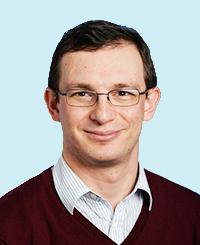
Professor Onur Mutlu
Onur Mutlu is a Professor of Computer Science at ETH Zurich. He previously held the William D. and Nancy W. Strecker Early Career Professorship at Carnegie Mellon University. His research interests are in computer architecture, computing systems, hardware security, memory & storage systems, and bioinformatics, with a major focus on designing fundamentally energy-efficient, high-performance, and robust computing systems. He started the Computer Architecture Group at Microsoft Research (2006-2009), and held product, research and visiting positions at Intel Corporation, Advanced Micro Devices, VMware, Google, and Stanford University. He received various honors for his research, including the 2025 IEEE Computer Society Harry H. Goode Memorial Award “for seminal contributions to computer architecture research and practice, especially in memory systems.” He is an ACM Fellow, IEEE Fellow, and an elected member of the Academy of Europe. He enjoys teaching, mentoring, and enabling & democratizing access to high-quality research and education. He has supervised 25 PhD graduates, many of whom received major dissertation awards, 18 postdoctoral trainees, and more than 70 Master’s and Bachelor’s students. His computer architecture and digital logic design course lectures and materials are freely available on YouTube and his research group makes a wide variety of artifacts freely available online. For more information, please see his webpage at https://people.inf.ethz.ch/omutlu/.
Event Location
Venue
Raleigh Convention Center
500 South Salisbury Street
NC 27601
Raleigh, USA
The tutorial will be held in conjunction with ISCA 2026.
For registration and accommodation information, please visit the ISCA 2026 website.
Contact
For questions about the tutorial, please contact the organizers:
General Inquiries: nisa.bostanci@safari.ethz.ch and ataberk.olgun@safari.ethz.ch
SAFARI Research Group: safari.ethz.ch