13:30 – 18:00
Room: Allegheny
MCCSys@ASPLOS'26
5th Workshop on Memory-Centric Computing Systems
In conjunction with the ACM International Conference on Architectural Support for
Programming Languages
and Operating Systems (ASPLOS 2026)
Pittsburgh, USA
About
Processing-in-Memory (PIM) is a computing paradigm that aims to overcome data movement bottlenecks by making memory systems compute-capable. Explored over several decades since the 1960s, PIM systems are now becoming a reality with the advent of the first commercial products and prototypes. PIM can improve performance and energy efficiency for many modern applications. However, there are many open questions spanning the entire computing stack and many challenges for widespread adoption.
This combined tutorial and workshop will focus on the latest advances in PIM technology, spanning both hardware and software. It will include novel PIM ideas, different tools and frameworks for conducting PIM research, and programming techniques and optimization strategies for PIM kernels. First, we will provide a series of lectures and invited talks that will provide an introduction to PIM, including an overview and a rigorous analysis of existing PIM hardware from industry and academia. Second, we will invite the broad PIM research community to submit and present their ongoing work on memory-centric systems. The program committee will favor papers that bring new insights on memory-centric systems or novel PIM-friendly applications, address key system integration challenges in academic or industry PIM architectures, or put forward controversial points of view on the memory-centric execution paradigm. We also consider position papers, especially from industry, that outline design and process challenges affecting PIM systems, new PIM architectures, or system solutions for real state-of-the-art PIM devices.
Agenda & Workshop Materials
Monday, March 23rd (13:30 – 18:00), Room: Allegheny
| Time | Talk | Materials |
|---|---|---|
| 13:30 – 13:40 |
Logistics/Welcome
Ismail Emir Yuksel
|
Slides |
| 13:40 – 14:30 |
Memory-Centric Computing: Solving Memory's Computing Problem
Prof. Onur Mutlu
|
Slides |
| 14:30 – 14:50 |
Understanding the Computational Capabilities of Real DRAM Chips and Robustness Issues They Introduce
Ismail Emir Yuksel
|
Slides |
| 14:50 – 15:10 |
PiDRAM: An FPGA-based Framework for End-to-end Evaluation of Processing-in-DRAM Techniques
Ataberk Olgun
|
Slides |
| 15:10 – 15:30 |
Revisiting Main Memory-Based Covert and Side Channel Attacks in the Context of Processing-in-Memory
Nisa Bostanci
|
Slides |
| 15:30 – 16:00 | Coffee Break | |
| 16:00 – 17:00 |
Fast and Energy-Efficient Databases using Processing-in-Memory
|
Slides |
| 17:00 – 17:20 |
DeepFuse: Speculative Load Micro-Op Fusion
|
Slides |
| 17:20 – 17:40 |
Enabling Near-Accelerator Performance With Generic Processing-Using-Memory Architectures
|
Slides |
| 17:40 – 18:00 |
UM-PIM: DRAM-based PIM with Uniform and Shared Memory Space
|
Slides |
| 18:00 – 18:05 |
Closing Remarks
Ismail Emir Yuksel
|
— |
Invited Speakers

Prof. Phillip Gibbons
Short Bio: Phillip Gibbons is a Professor in the Computer Science Department and the Electrical & Computer Engineering Department at Carnegie Mellon University (CMU). He received his Ph.D. in Computer Science from the University of California at Berkeley. Prior to joining CMU, Gibbons was a researcher at Bell Laboratories and Intel Research Pittsburgh, and co-director of the Intel Science and Technology Center for Cloud Computing. His research areas include parallel computing, databases, machine learning systems, computer architecture, and distributed systems. Recent projects range from the theory and practice of processing-in-memory (e.g., best paper runner-up at VLDB’23) to computer architecture support for robotics (e.g., best paper at Sigmetrics’24). His 200+ publications span theory and systems, and have been cited 46,000+ times with an h-index of 87. Gibbons won the ACM Paris Kanellakis Theory and Practice Award for pioneering the foundations of streaming data analytics (2019). He was founding Editor-in-Chief for the ACM Transactions on Parallel Computing, Associate Editor for the Journal of the ACM and other journals, and program/area/general chair for over a dozen conferences. Gibbons is both an ACM and IEEE Fellow.
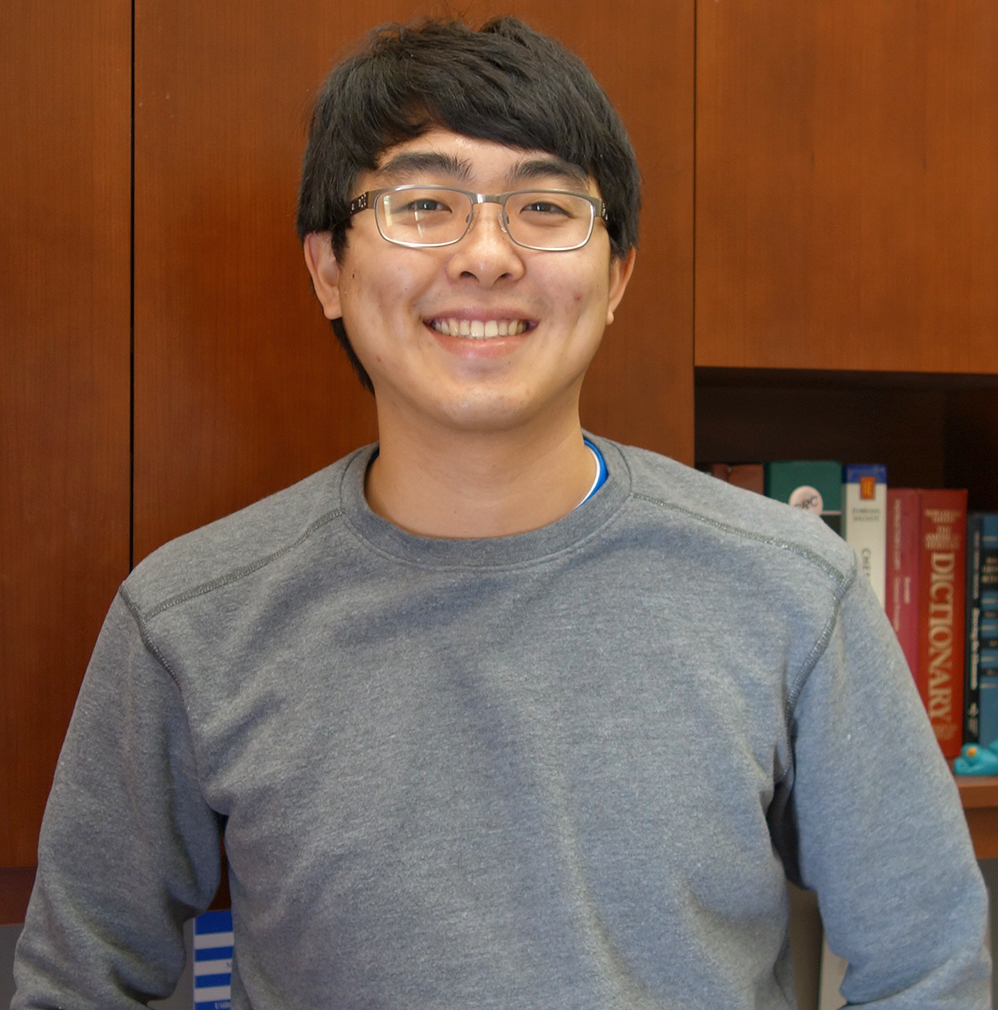
Ryan Wong
Short Bio: Ryan Wong is a fifth-year Ph.D. student at the University of Illinois Urbana-Champaign working under Prof. Saugata Ghose. His research interests are in the broad area of computer architecture, with particular emphasis in memory and storage systems, as well as accelerators for scientific computing and database systems. He is a Mavis Future Faculty Fellow, and has won the UIUC CS Outstanding TA Award. He received his B.S. in Computer Science, B.A. in Chemistry, and M.S. in Electrical Engineering all from the University of Rochester. For more information, please visit his website at https://rwong.cs.illinois.edu.
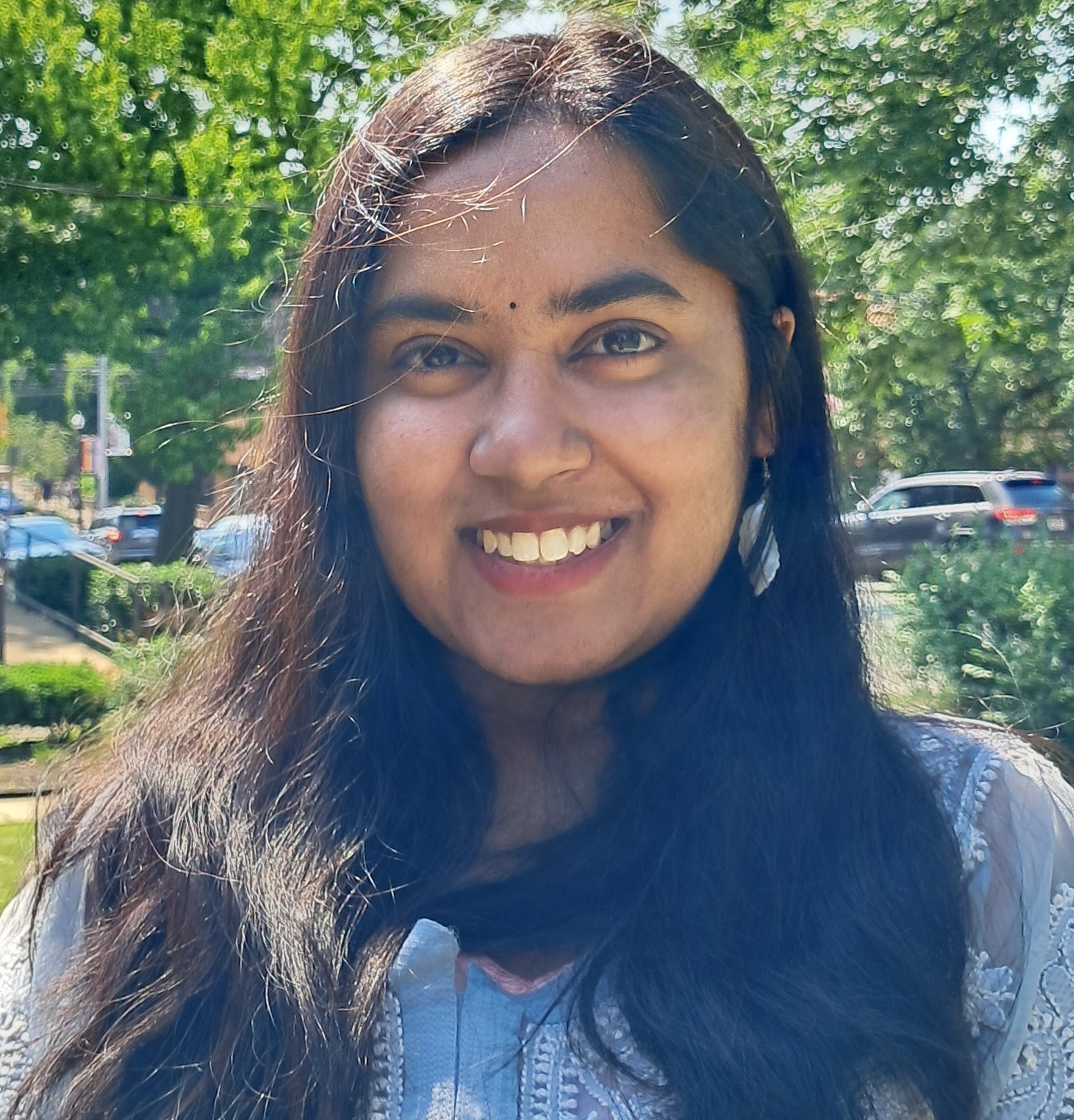
Deepanjali Mishra
Short Bio: Deepanjali Mishra is a Ph.D. student in the Electrical and Computer Engineering (ECE) department at Carnegie Mellon University (CMU), advised by Prof. Akshitha Sriraman. Her research focuses on designing efficient computer systems, bridging computer architecture and operating systems to enable high-performance and sustainable hyperscale data center solutions across the compute stack. Deepanjali’s work has been recognized with the 2024 Carnegie Institute of Technology Dean's Fellowship and the ACM-W Scholarship.

Yilong Zhao
Short Bio: Yilong Zhao is a Ph.D. candidate at Shanghai Jiao Tong University, advised by Professor Li Jiang. He is a member of the Advanced Computer Architecture Lab (ACA-IMPACT). His research focuses on processing-in-memory (PIM) architectures and AI accelerators. He received his M.S. and B.S. degrees from Shanghai Jiao Tong University in 2021 and 2018, respectively.
Livestream
🔴 Can't attend in person? Join us live!
The workshop will be livestreamed on YouTube. A replay will also be available afterwards.
▶️ Watch on YouTubeCall for Presentations
This workshop consists of invited talks on the general topic of memory-centric computing systems. There are a limited number of slots for invited talks. If you would like to deliver a talk on related topics, please contact us by filling out this form.
We invite abstract submissions related to (but not limited to) the following topics in the context of memory-centric computing systems:
- Design of novel and new processing-in-memory (PIM) architectures, including system solutions for real state-of-the-art PIM devices
- Analysis and mapping of novel applications to state-of-the-art PIM systems
- Programming models and code generation support for PIM
- Runtime engines for adaptive code and data scheduling, data mapping, access control for PIM systems
- Memory coherence mechanisms for collaborative host–PIM execution
- Virtual memory support for a unified host and PIM address space
- Data structures and algorithms for PIM systems
- Infrastructures to assess the benefits and feasibility of PIM systems, including benchmarks and simulation infrastructures for PIM prototyping
- Issues related to robustness and security of PIM systems
- Experimental analysis and benchmarking of real PIM systems
Key Dates
Organizers

Ismail Emir Yuksel
Ismail Emir Yuksel is a 2nd-year PhD student in the SAFARI Research Group at ETH Zurich under the supervision of Prof. Onur Mutlu. His current broader research interests are in computer architecture, processing-in-memory, and hardware security, focusing on understanding, enhancing, and exploiting fundamental computational capabilities of modern DRAM architectures. His recent publications show that commodity DRAM chips, without any modification to the chip itself (only with modifications to the memory controller), are able to execute bulk-bitwise computation and data movement operations (including NAND, NOR, NOT, AND, OR, MAJority, multi-row copy, and initialization functions) in a reasonably robust manner.

F. Nisa Bostanci
F. Nisa Bostanci is a fourth-year PhD student in the SAFARI Research Group at ETH Zurich, under the supervision of Prof. Onur Mutlu. She is broadly interested in computer architecture and, more specifically, in security, reliability, and safety (robustness) of memory systems, emerging memory and computation paradigms, including Processing-In-Memory architectures (PIM), and designing effective and efficient solutions to address robustness issues in modern and future systems. Her recent works uncover and mitigate new security vulnerabilities that emerge with the adoption of read disturbance solutions and PIM architectures to aid in designing robust future systems.

Ataberk Olgun
Ataberk Olgun is a senior PhD student at ETH Zurich, working with Prof. Onur Mutlu. His broad research interests include designing secure, high-performance, and energy-efficient DRAM architectures. Especially with the worsening RowHammer vulnerability, it is increasingly difficult to design new DRAM architectures that satisfy all three characteristics. His current research focuses on i) deeply understanding and ii) efficiently mitigating the RowHammer vulnerability in modern systems.

Dr. Zhiheng Yue
Zhiheng Yue is a postdoctoral researcher at ETH Zurich, working with Prof. Onur Mutlu. He received the B.S. degree in electronic science and technology from the Beijing University of Posts and Telecommunications, Beijing, China, in 2017, and the M.S. degree in electrical and computer engineering from the University of Michigan, Ann Arbor, MI, USA, in 2019, and the Ph.D. degree in electronic science and technology from Tsinghua University, Beijing, in 2024. His current research interests include deep learning, Processing-in-memory, AI acceleration, 3D stacking, and very-large-scale-integration (VLSI) design.

Dr. Mohammad Sadrosadati
Mohammad Sadrosadati received the B.Sc., M.Sc., and Ph.D. degrees in Computer Engineering from Sharif University of Technology, Tehran, Iran, in 2012, 2014, and 2019, respectively. He spent one year, from April 2017 to April 2018, as an academic guest at ETH Zurich, hosted by Prof. Onur Mutlu during his Ph.D. program. He is currently a senior researcher and lecturer at ETH Zurich, working under the supervision of Prof. Onur Mutlu. His research interests are in the areas of heterogeneous computing, processing-in-memory, memory systems, and interconnection networks. Due to his achievements and impact on improving the energy efficiency of GPUs, he won the Khwarizmi Youth Award, one of the most prestigious awards, as the first laureate in 2020, to honor and embolden him to keep taking even bigger steps in his research career.

Dr. Geraldo F. Oliveira
Geraldo F. Oliveira received a B.S. degree in computer science from the Federal University of Viçosa, Viçosa, Brazil, in 2015, an M.S. degree in computer science from the Federal University of Rio Grande do Sul, Porto Alegre, Brazil, in 2017, and a Ph.D. degree in computer science from ETH Zürich, Zürich, Switzerland, in 2025, advised by Prof. Onur Mutlu. His current research interests include system support for processing-in-memory and processing-using-memory architectures, data-centric accelerators for emerging applications, approximate computing, and emerging memory systems for consumer devices. He has several publications on these topics.

Professor Onur Mutlu
Onur Mutlu is a Professor of Computer Science at ETH Zurich. He previously held the William D. and Nancy W. Strecker Early Career Professorship at Carnegie Mellon University. His research interests are in computer architecture, computing systems, hardware security, memory & storage systems, and bioinformatics, with a major focus on designing fundamentally energy-efficient, high-performance, and robust computing systems. He started the Computer Architecture Group at Microsoft Research (2006-2009), and held product, research and visiting positions at Intel Corporation, Advanced Micro Devices, VMware, Google, and Stanford University. He received various honors for his research, including the 2025 IEEE Computer Society Harry H. Goode Memorial Award "for seminal contributions to computer architecture research and practice, especially in memory systems." He is an ACM Fellow, IEEE Fellow, and an elected member of the Academy of Europe. He enjoys teaching, mentoring, and enabling & democratizing access to high-quality research and education. He has supervised 25 PhD graduates, many of whom received major dissertation awards, 18 postdoctoral trainees, and more than 70 Master's and Bachelor's students. His computer architecture and digital logic design course lectures and materials are freely available on YouTube and his research group makes a wide variety of artifacts freely available online. For more information, please see his webpage at https://people.inf.ethz.ch/omutlu/.
Past Editions
Event Location
Venue
The Landing Hotel
757 Casino Dr. Pittsburgh
PA 15212
Pittsburgh
USA
The workshop will be held in conjunction with ASPLOS 2026.
For registration and accommodation information, please visit the ASPLOS 2026 website.
Contact
For questions about the workshop, please contact the organizers:
General Inquiries: ismail.yuksel@safari.ethz.ch
SAFARI Research Group: safari.ethz.ch